

Micronutrients in Crop Production: Why They Matter and How to Deliver Them Effectively
March 7, 2026
In fertility programs, macronutrients dominate the conversation. Nitrogen, phosphorus, and potassium get the most attention, the largest line items in the budget, and the most frequent applications. Micronutrients — boron, copper, manganese, zinc, iron, and their companions — are applied in much smaller amounts and often treated as an afterthought.
But in high-value California crops, micronutrient deficiencies are responsible for yield losses and quality problems that are frequently misdiagnosed, consistently underestimated, and almost always preventable. Understanding what each micronutrient does, which crops are most vulnerable to deficiency, and how to deliver them in a form the plant can actually use is foundational to a complete crop nutrition program.
Why Micronutrients Are Anything But Minor
Micronutrients are required by plants in small concentrations — typically in parts per million rather than the percentages associated with macronutrients — but their functions are anything but minor. They are the catalysts and co-factors for the enzymatic reactions that drive photosynthesis, nitrogen metabolism, hormone synthesis, cell wall formation, and disease defense. Without them, the machinery of plant growth slows or stops regardless of how much nitrogen or phosphorus is available.
The relationship between micronutrients and enzymes is the key to understanding why they matter so much. Enzymes are proteins that catalyze the biochemical reactions plants use to grow, reproduce, and defend themselves. Most of these enzymes require a specific micronutrient — called a cofactor — to function. Zinc activates more than 300 known enzymes in plant metabolism. Manganese is required for the oxygen-evolving complex in photosynthesis. Copper is essential for enzymes involved in lignin synthesis and electron transport. Boron stabilizes the cell wall structures that hold everything together.
When even one of these micronutrients is deficient, the enzymatic processes that depend on it slow down — and the symptoms show up as visible problems in the crop: distorted growth, chlorosis, poor fruit set, reduced Brix, thin cell walls, and increased susceptibility to pathogens.
The California Soil Problem: Why Deficiency Is So Common
California's primary agricultural soils — particularly in Ventura County, the San Joaquin Valley, and the coastal growing regions — share a characteristic that makes micronutrient management challenging: they tend toward alkaline pH. In soils with pH above 7.0, and especially above 7.5, the chemistry of most micronutrients shifts dramatically toward insoluble forms that plant roots cannot access.
Iron, zinc, and manganese form insoluble hydroxides and oxides at high pH. Boron's availability decreases in both very acidic and very alkaline soils. Copper availability also declines with increasing pH, particularly in soils with high organic matter that binds copper tightly. The result is that soils in California's prime growing regions can contain adequate total concentrations of these micronutrients while being essentially deficient in plant-available forms — a situation where standard soil testing showing adequate levels gives a false sense of security.
Years of intensive crop production compound this further. High-yield programs remove micronutrients from the soil with every harvest, and conventional fertility programs rarely replace them at the rate they are removed. Fumigation — still common in strawberry production — reduces the microbial populations that play a role in cycling micronutrients into plant-available forms. Salt accumulation from irrigation water further restricts root function and nutrient uptake at the cellular level.
The Four Micronutrients at the Center of California Crop Production
Zinc — The Master Enzyme Activator
Zinc is arguably the most important micronutrient in high-value crop production and the one most consistently limiting in California's alkaline soils. It activates a wider range of plant enzymes than any other micronutrient — enzymes responsible for growth hormone synthesis (particularly auxin, IAA), protein synthesis, carbohydrate metabolism, and the reproductive processes that govern flower initiation, pollen viability, and fruit set.
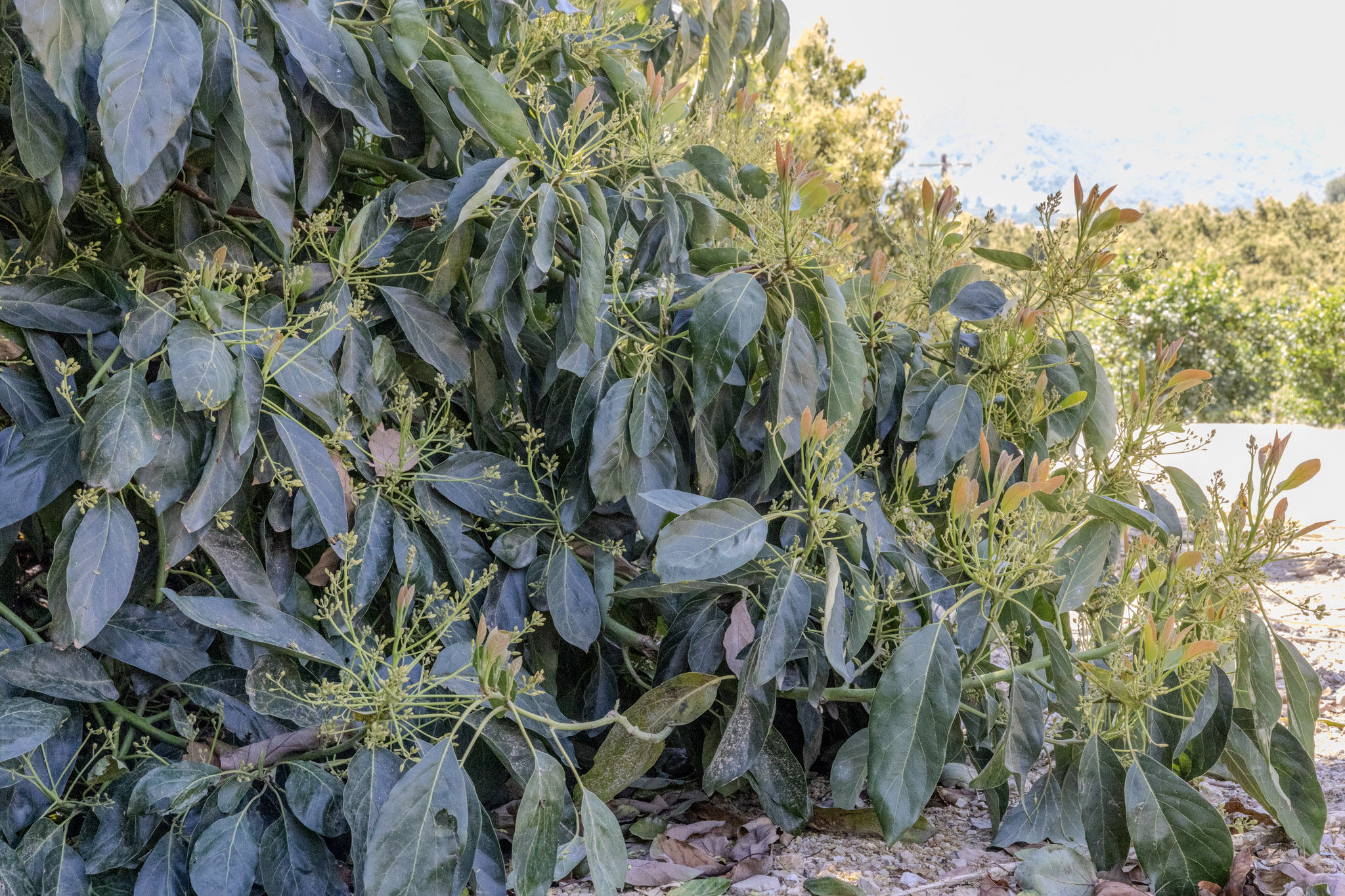
In avocado, zinc deficiency is one of the most common nutritional disorders in Ventura County groves. It appears as interveinal chlorosis in young leaves — the veins stay green while the tissue between them yellows — and in severe cases causes a symptom known as little leaf, where new growth is stunted and malformed. Deficient trees show reduced flower set, poor fruit retention, and significantly lower yields.
In strawberries, zinc deficiency during the early vegetative stage limits the production of auxin, which is needed for root extension and runner development. Plants establish more slowly, canopy development is compressed, and the yield potential of the planting is reduced before the first flower is visible.
In citrus, zinc deficiency causes mottle leaf — a mottled yellow pattern on the leaves — and reduces fruit size and juice content at harvest. It is one of the most economically significant micronutrient problems in California citrus and one of the most responsive to foliar treatment.
Manganese — The Photosynthesis Driver
Manganese plays a central role in photosynthesis through its involvement in the oxygen-evolving complex — the part of Photosystem II where water is split and oxygen is released. Without adequate manganese, the light reactions of photosynthesis are impaired, reducing the plant's ability to produce the carbohydrates that fuel everything else.
In vegetable crops — lettuce, spinach, broccoli, and celery — manganese deficiency causes interveinal chlorosis in young leaves similar in appearance to iron deficiency but with a different tissue pattern. In strawberries, manganese deficiency reduces photosynthetic efficiency during the critical fruit-sizing period when carbohydrate demand from the developing fruit is highest. The result is smaller, lighter fruit with reduced Brix.
Manganese also plays a critical role in nitrogen metabolism — specifically in the nitrate reduction pathway that converts applied nitrate into organic nitrogen the plant can use. Manganese-deficient plants are less efficient at utilizing applied nitrogen, meaning that a manganese deficiency can effectively reduce the return from the nitrogen program.
Copper — The Disease Defense Mineral
Copper is essential for lignin synthesis — the process that builds the structural compounds that make plant cell walls rigid and resistant to pathogen penetration. Plants deficient in copper have weaker cell walls that are more easily breached by fungal and bacterial pathogens. In avocado, where Phytophthora root rot is a constant management challenge, adequate copper nutrition supports the root cell wall integrity that is part of the plant's first line of defense against infection.
Copper also plays a critical role in photosynthesis through its function in plastocyanin, the electron carrier in Photosystem I, and in various enzymes involved in electron transport. Deficiency appears as bluish-green discoloration of leaves, wilting of young shoots despite adequate soil moisture, and in severe cases, dieback of shoot tips.
In citrus, copper deficiency causes a condition known as summer dieback, where shoot tips die back during the summer heat and the tree shows reduced fruit quality and size. Regular copper applications in citrus programs — both for disease management and for nutritional support — are standard practice in California.
Boron — The Reproductive Mineral
Boron's most critical function in crop production is in reproductive processes — specifically pollen tube growth, fertilization, and fruit set. Without adequate boron, pollen tubes cannot elongate properly to reach the ovule, fertilization fails, and fruit set is reduced regardless of the flowering intensity.
In avocado, boron deficiency during the bloom period is directly linked to poor fruit set. Dr. Carol Lovatt's research at UC Riverside identified boron as one of the key nutrients that, when applied at bloom, can improve fruit set in Hass avocado. In strawberries, boron deficiency during flower development reduces the percentage of flowers that set fruit and increases the proportion of misshapen or button fruit in the harvest.
Boron is also critical for cell wall stability — it cross-links pectin in the primary cell wall, contributing to the structural integrity that supports both pathogen resistance and fruit firmness. In celery and other vegetables where tip burn is a problem, boron deficiency affecting calcium distribution within the plant is often a contributing factor.
One important note for Ventura County avocado and citrus growers: boron toxicity from well water is a documented problem in parts of the region, where naturally high boron concentrations in groundwater can accumulate in the soil to levels that are toxic to sensitive crops. Soil and water testing before adding boron to a program is an important precaution in these areas.
Why Chelation Is Not Optional — and Why the Chelating Agent Matters
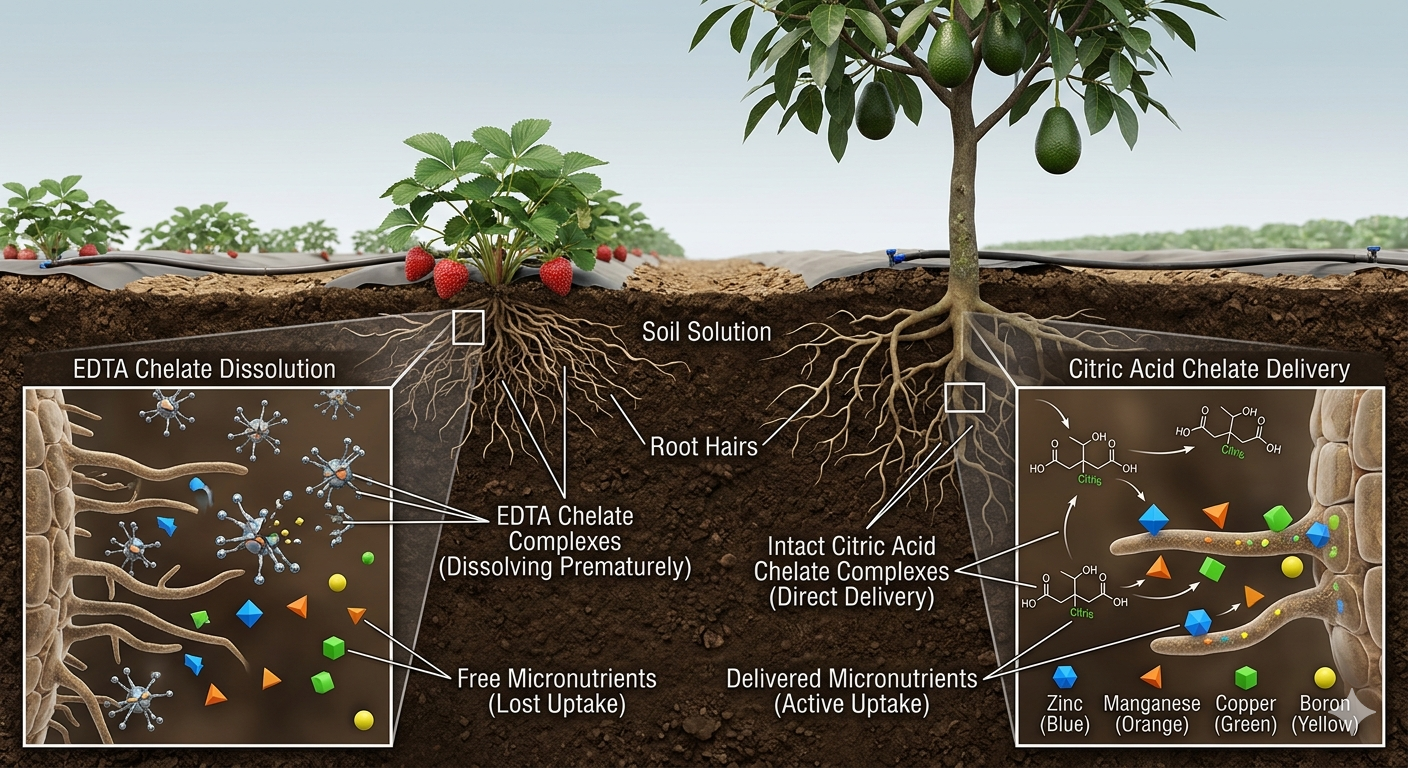
Delivering micronutrients to a crop and having that crop actually absorb them are two different things. In California's alkaline soils, unchelated micronutrient salts applied to the soil — zinc sulfate, manganese sulfate, copper sulfate — react rapidly with soil chemistry to form insoluble compounds. The micronutrient reaches the root zone but is not in a form the plant can absorb. Much of what is applied is wasted.
Chelation solves this problem by surrounding the micronutrient ion with an organic molecule — the chelating agent — that protects it from reacting with soil chemistry and keeps it in a soluble, plant-available form until it reaches the root surface. Once absorbed, the micronutrient is released from the chelate inside the plant where it can participate in enzymatic reactions.
The choice of chelating agent matters significantly. Different chelating agents have different stability across the pH range. EDTA, a common synthetic chelate, is effective at low to neutral pH but begins to release its bound micronutrient at pH above 6.5 — precisely the range at which most California agricultural soils operate. At pH 7.5 and above, EDTA-chelated micronutrients are substantially less stable than the label claims.
Citric acid, by contrast, is a naturally occurring organic chelating agent that is effective across a broader pH range and is fully biodegradable. In the context of organic certification, citric acid chelation is OMRI-acceptable whereas synthetic chelating agents like EDTA and DTPA are not. For conventional programs, the advantage of citric acid chelation is its broad-pH stability and its rapid biodegradation to carbon dioxide and water with no residue concerns.
There is also a practical mixing advantage. Citric acid lowers the pH of the solution, which improves the solubility and compatibility of the micronutrients in the tank and reduces the risk of precipitation when mixing with other fertility or crop protection inputs. Growers who have experienced compatibility problems with other micronutrient products frequently find that citric acid chelated products mix more cleanly and remain in suspension more reliably.
Zone TR-3 and Zone VR-5: Designed for This Problem
Zone TR-3 and Zone VR-5 are both citric acid chelated micronutrient products specifically formulated for the micronutrient management challenges common in California high-value crop production. Both are OMRI-certified for use in certified organic operations.
Zone TR-3 provides boron (0.25%), chelated copper (0.25%), chelated manganese (1.0%), and chelated zinc (6.0%). The formulation is built around zinc as the primary active component — reflecting its central role as the master enzyme activator in plant metabolism. TR-3 is designed to support the full enzymatic program in high-demand crops, with the zinc concentration specifically calibrated to support the enzyme and energy acceleration requirements of intensive production programs. Application rates for multi-spray crops are typically 4 to 8 fl oz per acre per application.
Zone VR-5 provides boron (0.60%), chelated copper (1.70%), and chelated manganese (4.80%). The formulation emphasizes copper and manganese at higher concentrations relative to TR-3, making it particularly well-suited for programs where disease pressure, photosynthetic efficiency, and nitrogen metabolism are primary concerns. The elevated copper level supports cell wall integrity and lignin synthesis, while the higher manganese concentration addresses photosynthesis and nitrogen utilization. Application rates follow the same 4 to 8 fl oz per acre range, and VR-5 is also used as a tank mix pH adjustment tool — one ounce per gallon lowers solution pH to approximately 5.5, improving bloom set when combined with other Zone foliar products.
The two products are designed to be used together or alternated depending on crop stage and program focus. TR-3 leads with zinc for enzyme and growth support; VR-5 leads with copper and manganese for disease defense and photosynthetic efficiency. Used in combination they provide a complete chelated micronutrient package across the most agronomically important elements for California crops.
Crop-Specific Application Priorities
Strawberries: Zinc is the primary concern during establishment and early vegetative growth. Manganese becomes critical during fruit development when photosynthetic demand is highest. Applications of TR-3 and VR-5 through the foliar or drip program from transplant through harvest provide consistent micronutrient support across the full production cycle.
Avocados: Zinc and boron at bloom are the highest-priority applications for fruit set. Copper nutrition is important throughout the season for cell wall integrity and Phytophthora resistance. Manganese supports the photosynthetic efficiency of the canopy during the fruit-sizing period. A pre-bloom TR-3 application followed by regular VR-5 applications through the growing season covers the key timing windows.
Citrus: Zinc for mottle leaf prevention and fruit sizing, copper for disease management and summer dieback prevention, and manganese for photosynthetic support are the primary micronutrient needs. Both TR-3 and VR-5 fit standard citrus foliar spray programs and are compatible with copper-based fungicide programs.
Vegetables (lettuce, celery, broccoli, spinach): The fast production cycles of Ventura County vegetable crops leave little time to correct micronutrient deficiencies after they appear. Starting with a solid micronutrient base at planting — using TR-3 or VR-5 in the transplant or early fertigation program — prevents the yield losses that come from deficiencies developing mid-season when correction is difficult.
The Bottom Line
Micronutrients are not optional supplements in California high-value crop programs — they are foundational inputs that determine whether the macronutrient program, the biological program, and the irrigation program can deliver their intended results. A crop that is zinc-deficient cannot synthesize adequate auxin. A crop that is manganese-deficient cannot photosynthesize at full efficiency. A crop that is boron-deficient at bloom will not set fruit regardless of how favorable the weather is.
The key to effective micronutrient management in California's alkaline soils is delivery — getting the micronutrient to the root or leaf surface in a form the plant can actually absorb. Citric acid chelation is the most practical, organically compatible, and agronomically effective approach available for this purpose, and it is why Zone TR-3 and Zone VR-5 are formulated the way they are.
For help building a micronutrient program for your specific crops and soil conditions, contact the Farm Rite USA team. With 40-plus years of hands-on field experience in California agriculture, we can help you identify the deficiencies that are limiting your yields and design a program that addresses them efficiently and cost-effectively.
Sharing is caring
If you found value in this blog post, please take a moment to share it on social media. Your support helps us continue to create valuable content.





.jpeg)