.png)
Getting Transplants Off to the Right Start: Zone Aqua 10 and Root Establishment
April 11, 2026
Every crop has a moment that determines more about the final yield than any other. For transplanted crops, that moment is the first two weeks in the ground. What happens at the root level during establishment — how fast new roots form, how quickly the plant begins accessing water and nutrients from the native soil, and how well it manages the stress of being moved — sets the trajectory for the entire season.
Growers who understand this invest as much attention in what happens at planting as they do in the fertility and irrigation programs that follow. Zone Aqua 10 was designed with this window in mind. Its application at transplanting is one of the highest-return uses of any product in the Zone line — and the biology behind why it works is worth understanding.
Why Transplanting Is the Highest-Stress Event in a Crop's Life
A transplant — whether a strawberry plug, an avocado tree, a tomato seedling, or a celery start — arrives at the field with a root system that was developed in a controlled environment. That root system is tuned to the specific conditions of the nursery: the growing medium, the irrigation frequency, the temperature range, the nutrient profile. The moment it goes into field soil, every one of those conditions changes simultaneously.
The plant's response to this is what growers know as transplant shock. Physiologically, it's a stress response driven by the disruption of water and nutrient uptake at the root level. Root hairs — the fine structures responsible for the vast majority of water and nutrient absorption — are damaged or destroyed during transplanting. Until the plant generates new root hairs and begins extending roots into the surrounding soil, it is operating at a significant deficit.
During this period the plant draws heavily on its internal reserves — stored carbohydrates, amino acids, and growth regulators — to fund the cellular activity needed to generate new roots. If those reserves are adequate and the soil environment is favorable, establishment happens quickly. If either is compromised, the plant stalls: growth slows, canopy development lags, and the crop enters a deficit it may never fully recover from during that season.
The practical consequence is direct and measurable. A strawberry plant that establishes in 10 days versus 21 days produces more runners, sets more fruit earlier in the season, and achieves better Brix. An avocado tree that establishes well in its first season builds the root architecture that will support decades of production. The investment made at planting pays dividends for the entire life of the planting.
The Role of Plant Growth Regulators in Root Initiation
New root development is not simply a function of the plant having enough water and nutrients available. It is a hormonally driven process governed primarily by two classes of plant growth regulators — auxins (IAA) and cytokinins — that must be present in the right balance at the root meristem for new root initiation to occur.
Auxins, specifically indole-3-acetic acid (IAA), are the primary hormonal signal for root initiation. They are synthesized primarily in actively growing shoot tips and transported downward through the plant toward the root zone, where they trigger the formation of new root primordia — the cellular structures from which new roots emerge. In a transplant under stress, shoot growth slows dramatically, auxin synthesis drops, and the downward flow of IAA to the roots is reduced at the exact moment when root regeneration is most critical.
Cytokinins complement auxin activity by driving cell division in the developing root tissue. Once root primordia are initiated by auxin, cytokinin activity determines how rapidly those primordia develop into functional roots and how aggressively the root system branches and expands into the surrounding soil. Low cytokinin availability limits root system density even when auxin signals are adequate.
Gibberellins, the third PGR class found in Zone Aqua 10, support cell elongation in the growing root tips, helping roots penetrate the soil profile more rapidly and access water and nutrients from a larger soil volume.
The implication for transplant management is clear: providing an exogenous source of these three PGR classes at the moment of planting directly supports the hormonal environment the plant needs for rapid root regeneration, at the exact time when its own endogenous production is most compromised by stress.
What Zone Aqua 10 Provides at Planting
Zone Aqua 10 is derived from select proprietary processed brown kelp — specifically Ascophyllum nodosum, one of the richest natural sources of bioactive plant growth regulators. The processing method is critical: the kelp is treated in a way that preserves the biological activity of the naturally occurring cytokinins, gibberellins, and auxins rather than degrading them through heat or chemical extraction.
Applied at transplanting, Zone Aqua 10 delivers three things simultaneously that directly address the physiology of transplant stress:
1. Exogenous PGRs to Supplement Reduced Endogenous Production
The naturally occurring cytokinins, gibberellins, and auxins in Zone Aqua 10 supplement the plant's own hormone production at the moment when stress has reduced endogenous synthesis. The cytokinins in kelp — primarily zeatin and zeatin riboside — are present in the same bioactive forms the plant produces itself, meaning they are immediately usable without requiring conversion. This exogenous PGR supply helps maintain the hormonal signals for root initiation and cell division even as the plant works to restabilize its internal systems.
2. Key Enzymes and Amino Acids to Reduce the Metabolic Cost of Recovery
Generating new root tissue is metabolically expensive. The plant must synthesize proteins, enzymes, and structural compounds to build new root cells, and it must do so while simultaneously managing stress responses that consume energy. Zone Aqua 10 provides key enzymes and amino acids that reduce this metabolic burden — delivering pre-formed building blocks that the plant can incorporate directly rather than having to synthesize from scratch. This frees up the plant's internal resources to accelerate root development rather than spending them on basic metabolic housekeeping during the recovery period.
3. Free Exchange Oxygen to Support Root Respiration
Root cells — particularly the rapidly dividing cells of the root meristem — have a high oxygen demand. Root respiration drives the energy production that powers cell division and growth. Zone Aqua 10's formulation includes an optimum level of free exchange oxygen that supports this cellular respiration in the root zone, particularly in transplant situations where the disruption of the root-soil interface may temporarily limit oxygen exchange.
Application Methods at Transplanting
Zone Aqua 10 is highly versatile in how it can be applied at planting, making it compatible with virtually any transplanting system used in commercial California agriculture.
Transplant solution (bare root dip): For bare root transplants — common in strawberry production — Zone Aqua 10 can be incorporated into the dip solution used to hydrate and treat roots before planting. This delivers the PGRs and amino acids directly to the damaged root surfaces at the moment of highest need, before the plant goes into the ground.
In-furrow application at planting: Apply Zone Aqua 10 directly into the planting furrow or hole ahead of the transplant. As irrigation water moves through the zone, the product is carried to the root interface where it can be absorbed immediately as the plant begins rehydrating in its new environment.
Drip fertigation immediately post-plant: In drip-irrigated systems, Zone Aqua 10 can be injected through the drip line in the first one to three irrigations after transplanting. This delivers a continuous supply of PGRs and amino acids to the root zone during the critical first week of establishment.
Foliar application at transplanting: A foliar application at planting provides an additional PGR source through leaf uptake, bypassing the disrupted root system entirely and delivering hormonal support through the canopy while the roots regenerate. This is particularly valuable in conditions where heat or wind stress at transplanting is high and foliar water loss is significant.
Crops and Timing: Where Zone Aqua 10 at Transplanting Has the Greatest Impact
Strawberries (Oxnard Plain and Santa Maria): The bare root transplant window in fall is the single most critical establishment event in the strawberry production cycle. Bare root plants arrive with root systems that have been dried and cooled for storage — a significant stress event. Zone Aqua 10 applied as a dip solution or in-furrow at planting accelerates the rehydration and root regeneration process, reducing the time from planting to first active root growth and tightening the establishment window across a block for more uniform plant development.
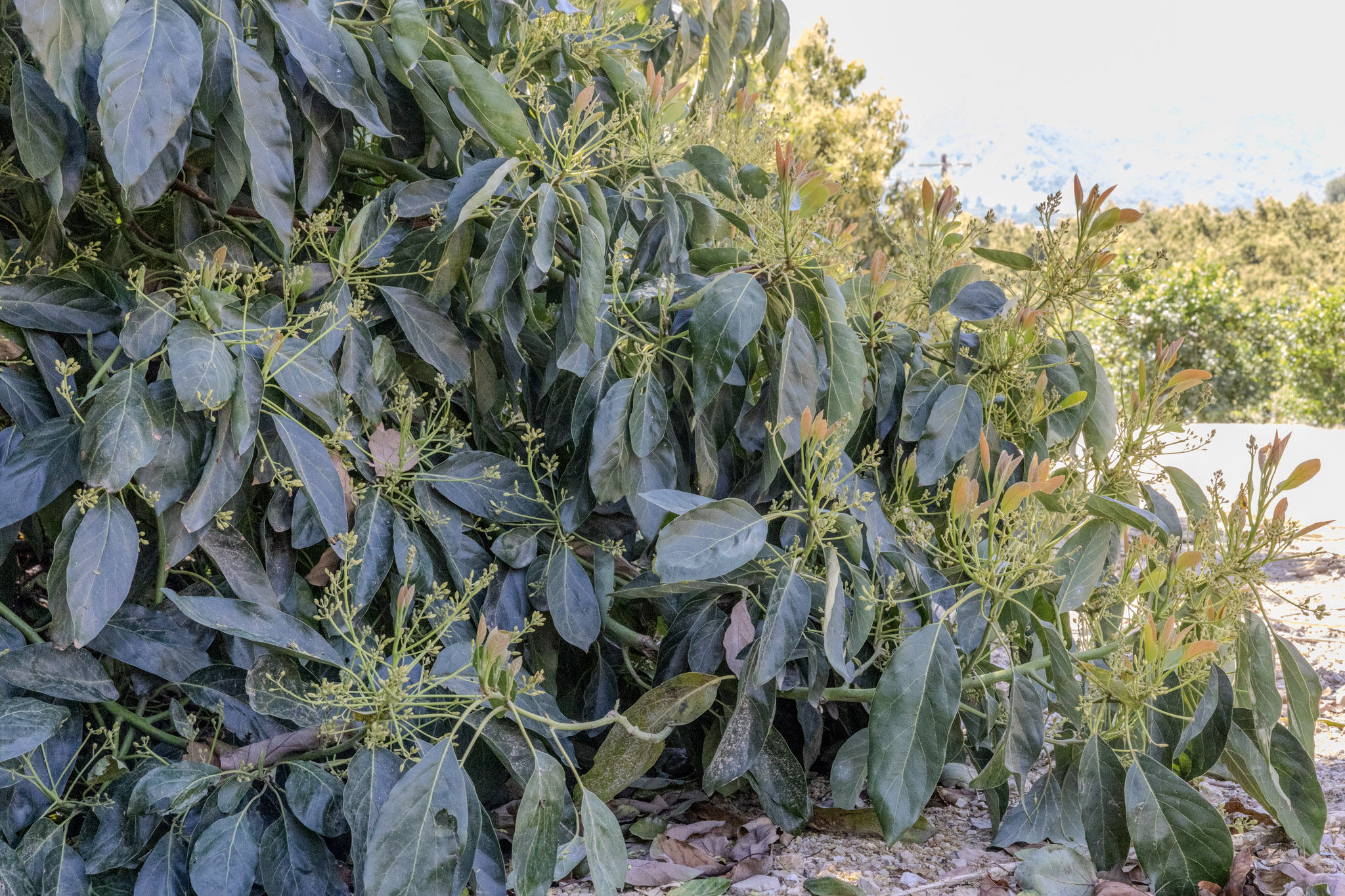
Avocados (Ventura County): Young avocado trees are particularly sensitive to transplant stress because their root system is shallow and the feeder roots are fragile. In Ventura County's heavier clay loam soils, the transition from nursery container media to native soil involves a significant change in water availability and oxygen levels. Zone Aqua 10 applied in-furrow or through the first several drip irrigations supports root extension into the native soil and helps the tree establish the feeder root density needed to sustain canopy growth through the first dry season.
Tomatoes and peppers: Transplanted vegetable crops have a narrow window from planting to first irrigation in which root-to-soil contact is being established. Zone Aqua 10 applied in-furrow at transplanting gives the root zone a hormonal primer for rapid new root development, reducing the lag time between planting and the point at which the plant is actively growing and feeding.
Celery and leafy vegetables: Fast-turnover vegetable crops on the Oxnard Plain depend on rapid establishment to hit target canopy size within tight production windows. Any delay in establishment compresses the vegetative growth period and reduces final yield. Zone Aqua 10 at planting is a practical tool for tightening the establishment curve and improving stand uniformity.
What to Expect After Application
The most reliable indicator that Zone Aqua 10 is working at transplanting is the speed and uniformity of canopy resumption. In a block where Zone Aqua 10 was applied at planting, new leaf development typically resumes 3 to 5 days earlier than in untreated plants under the same conditions. Plants show less leaf wilting during the first week, more upright posture, and better color retention — all signs that the root system is providing adequate water and nutrient flow to the canopy sooner than it would otherwise.
Stand uniformity also improves. When establishment is supported by an exogenous PGR and amino acid source, plant-to-plant variation across a block decreases because the hormonal and metabolic bottlenecks that cause some plants to lag are partially removed. More uniform establishment means more uniform canopy development, more uniform fruit load, and more predictable harvest timing.
Rates and Program Integration
Zone Aqua 10 is OMRI-certified for use in certified organic operations and is compatible with most standard transplant programs, fertilizer inputs, and crop protection products. It is water-soluble and suitable for injection through any drip or fertigation system.
For transplant applications, a rate of 8 to 16 fl oz per acre is appropriate for most crops, applied at or immediately after planting. In bare root dip applications for strawberries, the product is typically used at a low concentration diluted in the dip solution. Contact the Farm Rite USA team for crop-specific rate recommendations tailored to your production system.
The Bottom Line
Transplant establishment is not a passive process — it is an active biological event that responds directly to the hormonal and metabolic environment at the root level. Zone Aqua 10 supports that environment by providing naturally occurring plant growth regulators, amino acids, and oxygen at the moment the plant needs them most.
Growers who apply Zone Aqua 10 at transplanting consistently report faster establishment, more uniform stands, and better early-season growth — outcomes that translate directly into earlier and more productive harvests. For California growers working in tight production windows, the return on investment from a well-timed transplant application is among the highest of any input in the program.
To discuss application methods and rates for your specific crops and planting system, contact the Farm Rite USA team. We’re here to help you get every planting off to the best possible start.
Read Next: Rebuilding Degraded Soils in Ventura County
Sharing is caring
If you found value in this blog post, please take a moment to share it on social media. Your support helps us continue to create valuable content.




.jpeg)